English
 Bosanski
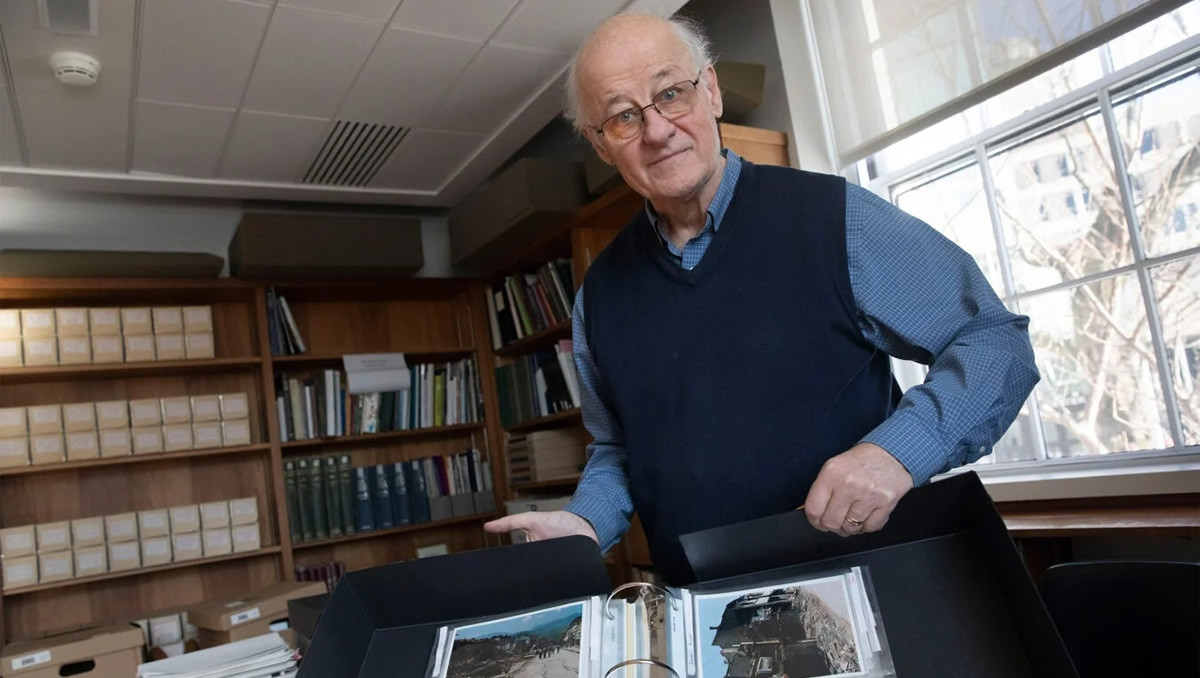
The Bosnian-Herzegovinian American Academy of Arts and Sciences (BHAAAS) announces with deep respect and sorrow that András Riedlmayer (1947–2026), long-serving Director of the Documentation Center for Islamic Architecture of the Aga Khan Program at Harvard University and an honorary member of BHAAAS, has passed away at the age of 79.
With the passing of Professor Riedlmayer, Bosnia and Herzegovina and the international academic community have lost an exceptional researcher, witness, and guardian of the truth about the systematic destruction of cultural and religious heritage during the aggression against Bosnia and Herzegovina.
A Witness to Truth and Documentarian of Cultural Destruction
Professor Riedlmayer was widely recognized in both academic and broader public circles for his decades-long, dedicated work documenting the destruction of mosques, Catholic churches, libraries, archives, and other cultural institutions in Bosnia and Herzegovina. His work provided a fundamental documentary basis for understanding the scale of the cultural destruction committed during the war.
His engagement extended beyond academic research and courtroom testimony. In 1995, Riedlmayer was among the signatories of a letter addressed to then-President of the United States Bill Clinton, calling for the lifting of the arms embargo on Bosnia and Herzegovina. The letter emphasized that the international community had failed to provide adequate protection to civilians and that Bosnia and Herzegovina’s right to self-defense was legitimate. Through this act, he demonstrated consistency in his commitment to justice, human rights, and the protection of those under threat.
Honorary Member of BHAAAS and Friend of Bosnia and Herzegovina
As an honorary member of BHAAAS, András Riedlmayer made an immeasurable contribution to the affirmation of truth, the culture of remembrance, and international academic cooperation. His connection to Bosnia and Herzegovina was not only professional but deeply human and ethical.
Through his work, he demonstrated that the protection of cultural heritage is not merely a matter of architecture and history, but a matter of identity, dignity, and the survival of a people. His contribution remains permanently woven into the collective memory of Bosnia and Herzegovina.
BHAAAS expresses its sincere condolences to Professor Riedlmayer’s family, colleagues, and friends. His life’s work remains an enduring reminder of the importance of truth, documentation, and responsibility toward history.