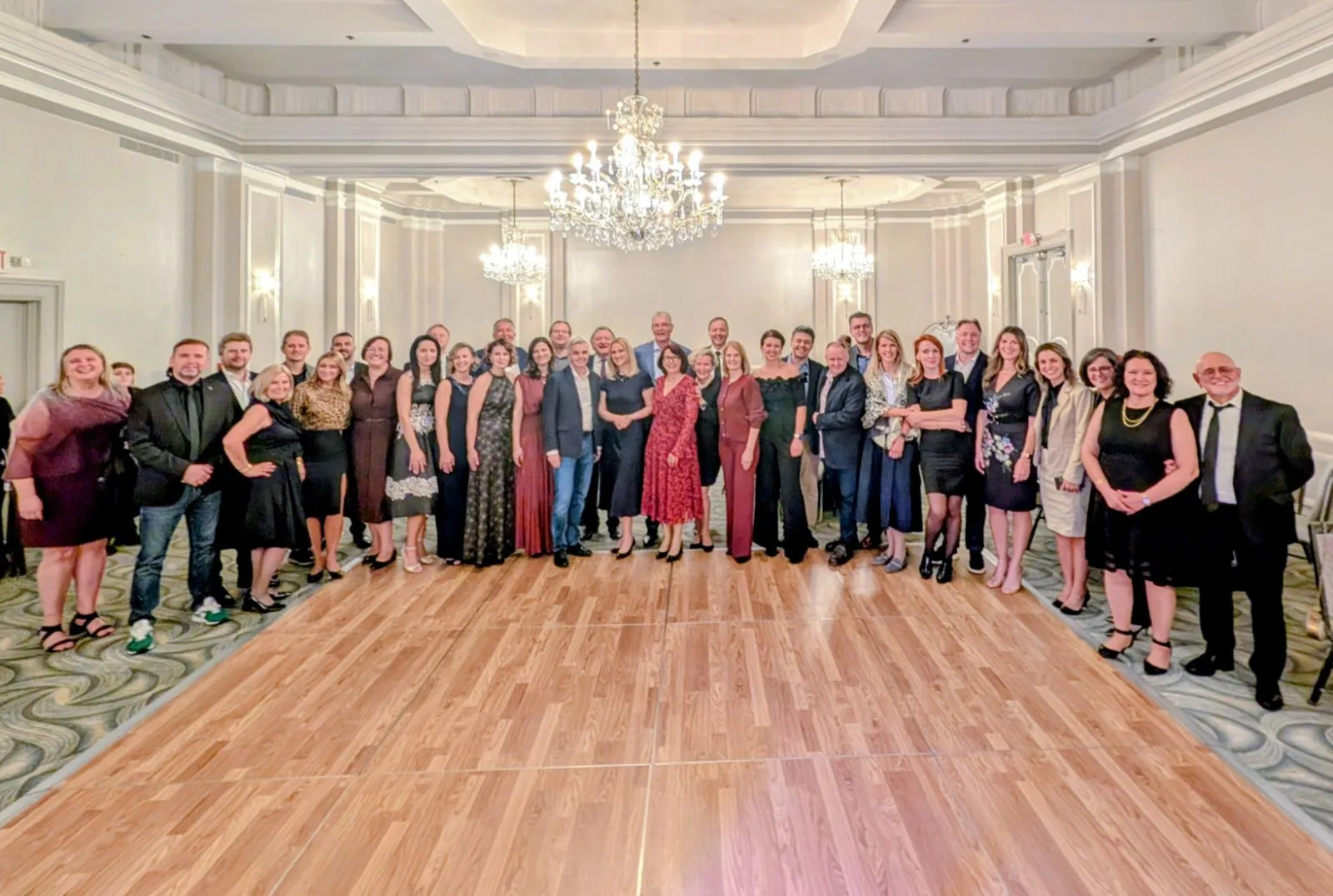

At a time when artificial intelligence (AI) is increasingly transforming science, medicine, the economy, culture, and society as a whole, the Bosnian-Herzegovinian American Academy of Arts and Sciences (BHAAAS) has decided to take a proactive and long-term approach. The BHAAAS Board of Directors has adopted a decision to launch an interdisciplinary initiative aimed at developing a strategy for integrating artificial intelligence across all disciplines and areas of activity within the Academy.
One of the key strengths of this initiative lies in the unique structure of BHAAAS, which brings together experts from medical, technical, and social sciences, as well as from culture and the arts. This diversity enables the creation of a comprehensive model for AI integration—one that does not view technology in isolation, but rather in the context of real societal needs.
The decision was made shortly after Dr. Zlatan Akšamija began his term as President of BHAAAS, with a clear message that the Academy seeks to be not only an observer, but an active contributor to the development of guidelines for the responsible and practical application of AI technologies. The coordination and design of this initiative have been entrusted to Dr. Mirsad Hadžikadić, one of the founders of BHAAAS and a long-standing advocate of a strategic and socially responsible approach to technological development.
“Artificial intelligence is a technical issue that already has a significant impact on how we work, treat patients, learn, create, and make decisions. That is why we must approach it in an interdisciplinary, strategic, and responsible way,” emphasizes Dr. Hadžikadić.
Shortly after defining the framework of the initiative, a process of consultations was launched with AI experts from both the BHAAAS diaspora and Bosnia and Herzegovina. Participants in these discussions to date include Dr. Seid Korić, Research Professor at the University of Illinois at Urbana–Champaign and Deputy Technical Director of the National Center for Supercomputing Applications (NCSA); Namik Hrle, Vice President for Development of IBM’s Data and AI division and Director of IBM’s development laboratory in Germany; Nedžad Lomigora, MIT graduate and founder of 387Labs; Dr. Suad Krilašević, PhD candidate at Delft University of Technology; and Haris Alikadić, AI Solutions Manager at Bloomteq.
“This is just the beginning. We are deliberately building an open working group and expect additional experts from various fields to join us in the next phases,” notes Dr. Hadžikadić.
Alongside the development of an internal strategy within BHAAAS, the initiative also has a strong development dimension focused on Bosnia and Herzegovina. In cooperation with local experts, the goal is to contribute to shaping economic, educational, political, investment, and strategic frameworks for the optimal use of AI potential in BiH. Planned activities include seminars and panels within the Days of BHAAAS, as well as year-round programs such as public lectures, roundtables, forums, workshops, consultations, collaboration with startups, and the preparation of strategic documents and guidelines.
“We are not building a one-time project, but a long-term process. This is a living initiative that will evolve, grow, and adapt as the technology itself develops,” concludes Dr. Hadžikadić.
The initiative has the status of an interdisciplinary program within BHAAAS, alongside existing programs such as the Sustainable Development Program and the Student Program, further confirming the Academy’s strategic commitment to advancing knowledge and practical applications through collaboration between the diaspora and experts in Bosnia and Herzegovina.
BHAAAS has been translating this approach into concrete activities for years. Through AI symposia regularly organized as part of the Days of BHAAAS, as well as collaboration with ANNT on an AI Hackathon competition for students, BHAAAS actively connects knowledge, practice, and new generations. In this way, artificial intelligence is not viewed merely as a technology of the future, but as a tool that can already address real societal needs today.
 English
 Bosanski