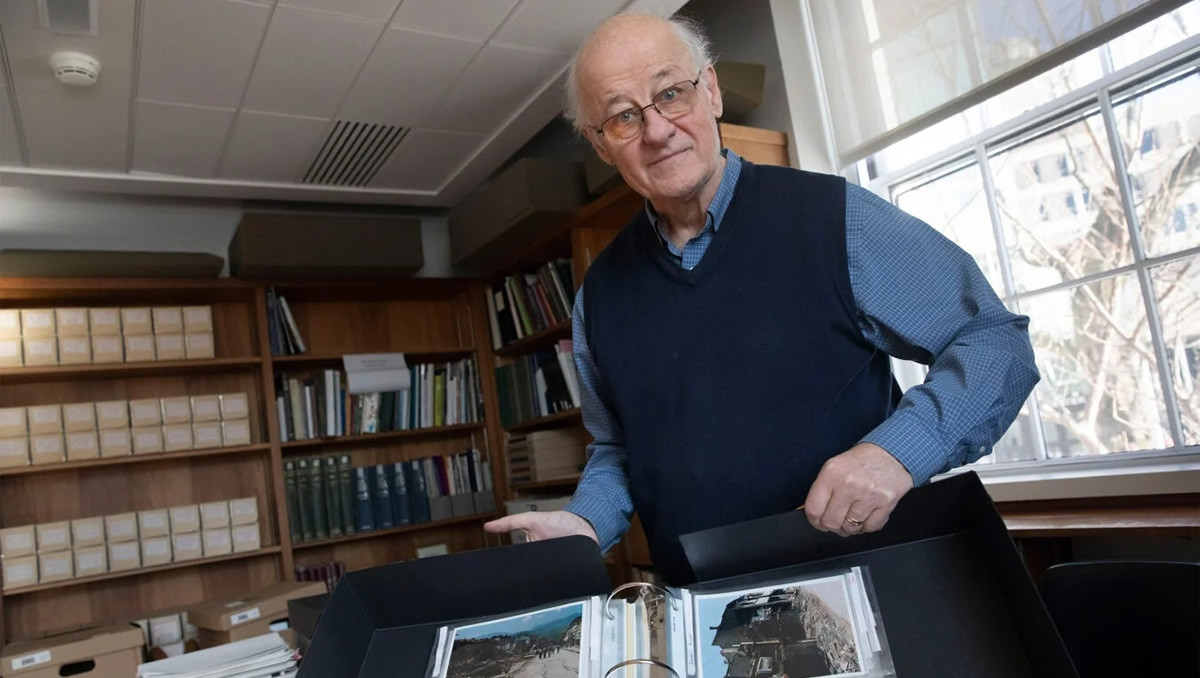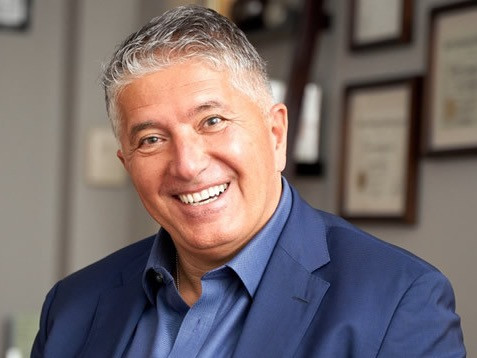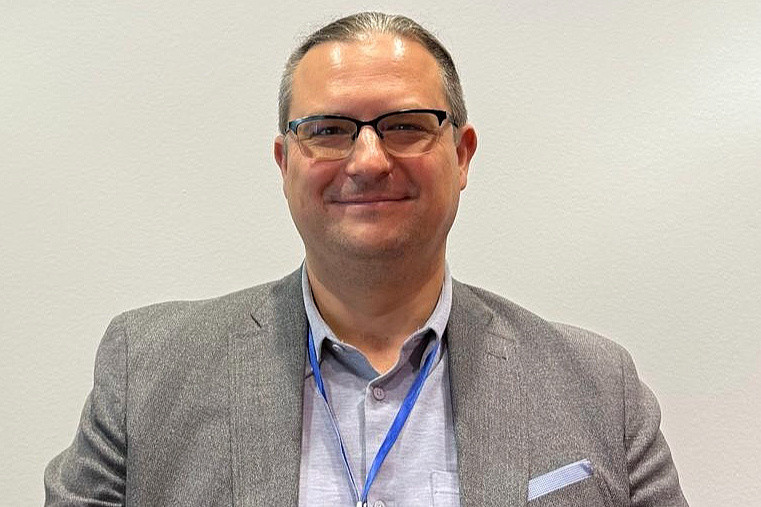
Prof. Dr. Zlatan Akšamija was recently elected President of the Bosnian-Herzegovinian American Academy of Arts and Sciences (BHAAAS), succeeding Dr. Adnan Begović in this role.
As a teenager, he fled war-torn Bosnia and Herzegovina with his family to the United States, where he now lives and has built his academic career. His doctoral dissertation, “Thermal Effects in Semiconductor Materials and Devices,” was supported by a scholarship from the U.S. Department of Energy. In addition, he has received multiple awards in the United States for his scientific work.
Since 2019, he has served as an Associate Professor at the University of Utah. His research and teaching focus on heat transfer and dissipation in nanostructured materials and devices. Nanostructures are defined as structures with dimensions ranging from one to 100 nanometers, where a nanometer is one billionth of a meter. These are extremely small structures that can only be observed using electron microscopes.
Together with his wife, Ajla, Akšamija has developed a “smart” building façade, which was one of the topics discussed in the interview. He also spoke about the work of BHAAAS, education, and artificial intelligence (AI).
What does leading BHAAAS mean to you?
I have been a member of BHAAAS for nearly eight years, and what initially attracted me was the organization’s mission, which focuses on the two-way exchange of knowledge between people from Bosnia and Herzegovina living abroad and those in the country.
Since I left Bosnia and Herzegovina during elementary school and completed high school, undergraduate, and postgraduate studies in the United States, I spent many years seeking opportunities to connect with researchers in similar scientific fields in Bosnia and Herzegovina. BHAAAS helped make that connection possible.
I felt a strong need to give back for everything BHAAAS had provided me by contributing through a leadership role. What truly kept me actively involved, however, were the people who form the backbone of the organization and the long-lasting friendships we have built through BHAAAS. It felt natural for me to step into the role of leading the organization and taking responsibility for its future.
Do the ideas promoted by BHAAAS find fertile ground in Bosnia and Herzegovina?
I believe the ideas championed by BHAAAS have received strong support in Bosnia and Herzegovina. Our annual conference, the Days of BHAAAS, which will take place next year from June 4 to 7, has become one of the largest interdisciplinary scientific events in the country.
In the coming year, we expect more than 20 symposia across medicine, technology, and science, accompanied by outstanding artistic and cultural events and more than 700 registered participants. Our increased focus on student involvement has also proven successful, as each year we see a growing number of students participating in the Days of BHAAAS.
Older generations believe that Generation Z lacks general knowledge. Do you agree?
Each generation of students is unique in its own way and faces distinct needs and challenges. With the growing use of artificial intelligence, distractions such as social media, and the disruptions caused by the COVID-19 pandemic, education today faces increasing challenges.
One of the key challenges is building solid and stable foundations of knowledge upon which specific intellectual and practical skills can be developed. However, every challenge is also an opportunity—here, an opportunity to focus more on deep thinking and analytical skills rather than memorization.
Is the essence of modern education to teach people how to learn?
We often forget that learning is very “expensive” in terms of the effort and energy required. When we learn, our brains literally destroy old connections and create new ones between brain cells. It is a dramatic process that makes our brains not only more active but also healthier. I believe we cannot truly teach others; we can only teach ourselves.
Educators therefore do not teach in the traditional sense—they guide and help students learn on their own. In today’s world, where we are overwhelmed with information from all sides, the ability to organize and connect information is what transforms information into knowledge. This process of educational mentorship, where an educator guides a learner through discovery, is more necessary than ever.
Where are the limits of market-driven approaches in education?
At the entrance door. The privatization of public education is a costly mistake that will burden generations to come in every aspect of society. This does not mean students should not be prepared for the job market. However, educators have a responsibility to prepare students not just for their first job, but for careers that may last 40 years or more.
That means preparing students for a labor market that may be entirely different from today’s. If we look back 40 years, the world of 1985 was only at the beginning of the personal computer era, the internet did not exist, and mobile phones were bulky “bricks.” Those who had strong educational foundations were able to adapt and keep pace with technological change. Today, more than ever, education must focus on enduring fundamentals.
Why have we reached a point where facts and science need to be defended?
I do not agree that facts need to be proven again. Just because someone chooses not to believe in facts or science does not mean they no longer exist. We are witnessing the erosion of certain societal consensuses, with more people questioning everything.
Part of the reason is that humans are social beings who tend to believe what others believe. This makes public opinion vulnerable to manipulation through fake and manipulative bots on social media, especially when traditional media legitimize such manipulation by repeating it.
Traditional media are under increasing pressure as they lose audiences and readership, leading them to compete for clicks through sensational headlines, populist content, and emotionally charged questions based on fear rather than reason and verified information.
What is discussed far less, but is crucial in my view, is that education no longer teaches young people how knowledge is actually acquired—what it means to “know” something and how we come to know it. Knowledge is not based solely on facts and information, but on developing mental models that explain how and why things work.
Our brains are prediction machines that recognize patterns. Facts gain meaning only when they are connected to mental models that explain underlying mechanisms. Symptoms of disease, for example, only make sense within our understanding of how viruses spread and replicate. Magnetism is not magic; it is part of the electromagnetic field that causes electron motion. Without understanding these mechanisms, facts become confusing or meaningless and lead to doubt about everything.
As a society, we increasingly stop asking “why.” Our natural curiosity is slowly atrophying because we are bombarded with information and facts from all sides, while the world around us makes less and less sense.
Will artificial intelligence reduce the need for acquiring knowledge?
On the contrary. Artificial intelligence lacks the human creativity that connects concepts and transforms knowledge into wisdom. Like the internet before it, AI will make information more accessible and summarize content from multiple sources, but information is still not knowledge.
You and your wife developed “smart” façades. Can you explain what they are and how they work?
Our patent for thermoelectric façades is based on the combination of my wife Ajla’s expertise in building façades and my expertise in thermoelectric materials. These materials can convert temperature differences into electrical voltage and, conversely, convert voltage into heat flow.
Thermoelectric materials have existed for decades, but new generations developed over the past ten years are far more efficient. We integrated thermoelectric modules into building façades to enable precise, localized heating and cooling, as well as electricity generation from the temperature difference between indoor and outdoor environments when buildings are not in use.
We have published several papers on this topic, built and tested prototypes, and recently received a patent. We hope that in the future, such active façades will help reduce energy consumption in buildings, which typically account for about 40 percent of total energy use. We are grateful to Dr. Edhem Čustović from BH Futures—an organization that has long collaborated with BHAAAS—for being the first in Bosnia and Herzegovina to write about our patent.
Article taken from https://www.klix.ba/scitech/nauka/zlatan-aksamija-vise-se-ne-obrazuje-o-tome-kako-sticemo-znanje-prirodna-znatizelja-nam-atrofira/251202094
 English
 Bosanski