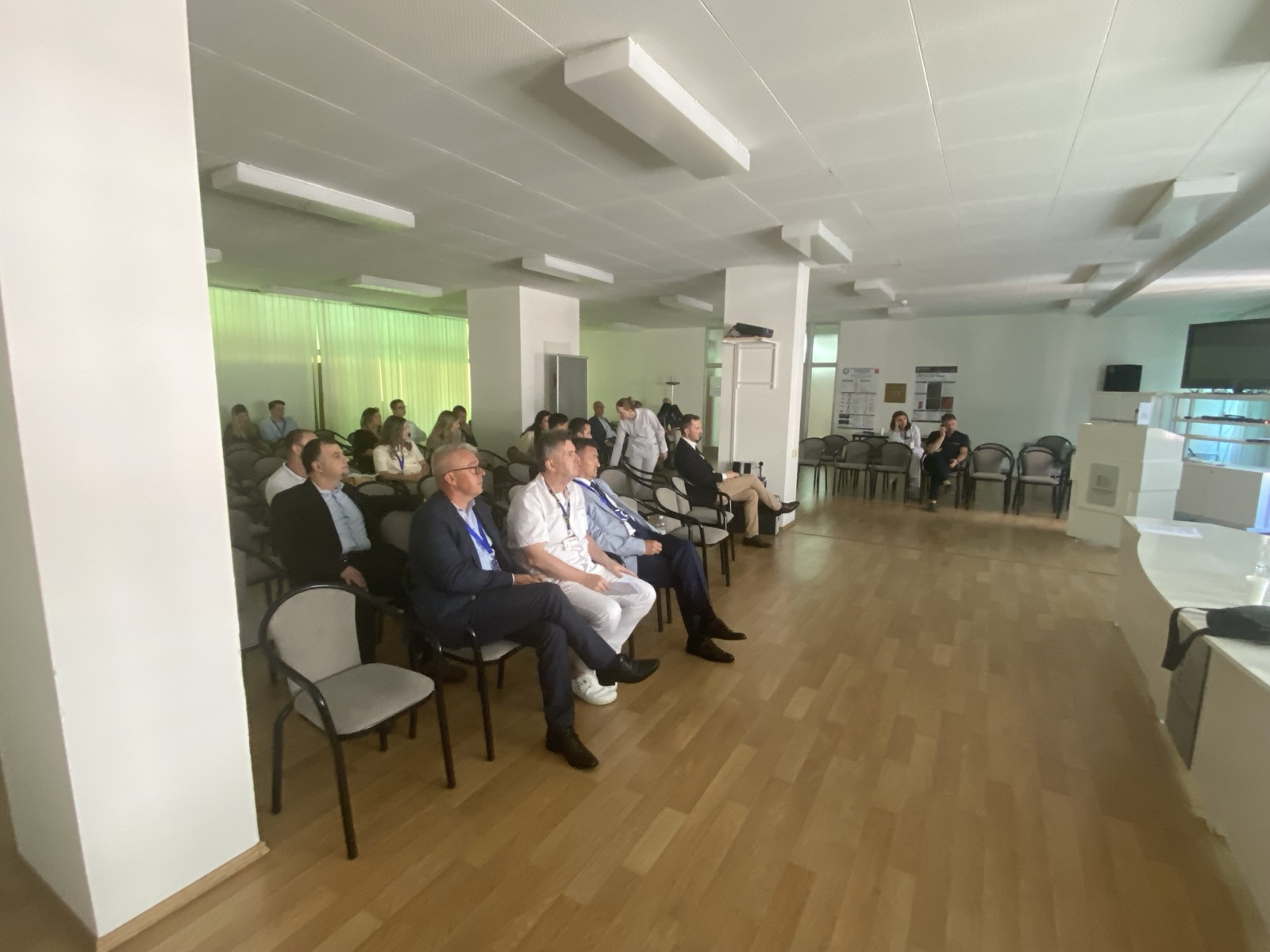
The International Symposium on Vascular Medicine, held as part of the 17th Day of BHAAAS, represented a significant professional gathering dedicated to contemporary challenges in vascular and endovascular medicine. The symposium program brought together eminent experts from Bosnia and Herzegovina, regions and European centers, with multidisciplinarity clearly emphasized as one of the key values of contemporary vascular practice. Of particular importance was the holding of the symposium at the General Hospital "Prim. Dr. Abdulah Nakaš" in Sarajevo, which further emphasized the connection between the academic community, clinical practice and international cooperation.
The topics of the program covered a wide range of current issues: from carotid surgery and prevention of cerebral ischemic complications, through modern wound treatment, deep vein thrombosis and post-thrombotic syndrome, to complex endovascular procedures on the aorta, EVAR and TEVAR procedures, hybrid reconstructions and treatment of rare vascular pathologies. Lectures by Nenad Ilijevski on carotid endarterectomy, Julian-Dario Rembe on the translational approach to antimicrobial wound treatment, Dragan Nikolić on the role of diosmin as an adjunct to anticoagulant therapy in acute proximal deep vein thrombosis, and Amir Arnautović on advanced endovascular and hybrid approaches in complex aortic and supraaortic pathology were particularly distinguished.

The key message of the symposium was that vascular medicine is rapidly developing towards an individualized, multidisciplinary and technologically advanced approach to treatment. Lectures and case presentations showed that successful care of vascular patients requires integration of surgery, endovascular methods, angiology, radiology, anesthesiology, intensive care medicine and primary health care. At the same time, the program pointed out the importance of translational research, standardization of therapeutic protocols, early recognition of vascular complications and continuous education of young doctors.
Of particular value were the contributions of experts from different health systems, including lectures and experiences from Düsseldorf, Munich, Freiburg, Belgrade, Novi Sad, Sarajevo, Foča, Bugojno and Mostar. Such an international and regional character of the meeting confirmed the importance of the BHAAAS platform as a bridge between the Bosnian medical community and experts from the diaspora and abroad. At the same time, the symposium provided space for the affirmation of local authors, the presentation of clinical experiences from Bosnia and Herzegovina, and the exchange of knowledge on how to develop vascular and endovascular medicine in environments with limited resources.
The conclusion of the symposium is that the future development of vascular medicine in Bosnia and Herzegovina should be directed towards the strengthening of regional and international professional networks, the development of joint educational programs, the establishment of registers of vascular diseases, joint research projects and the continuous exchange of clinical experiences. The BHAAAS community can play an important role in this process by connecting local institutions with experts from the diaspora, organizing thematic workshops and supporting young doctors in the education of vascular and endovascular medicine. This symposium showed that there is knowledge, enthusiasm and international capacities for continued cooperation and further improvement of this important field of medicine.
 English
 Bosanski